For the next few days, you can get The Man from Primrose Lane on your Kindle, Nook, or other eReader for only $3.99.
Here’s what some GoodReaders are saying about it:
“I totally adore books that keep me guessing, that keep revealing new things to me along the way, and which aren’t completely predictable. And a book that ends in such a way that makes me glance back at the beginning with a smile, and a promise to myself that I’m going to read it again?”
“…and so i was just reading along, doodley doodley doooo and then wait WHAT???”
“What an arresting, addictive little genre-tapdance, this novel. It’s a matroyshka doll of a story masquerading as lit-fic murder mystery, which manages to combine the plot set-ups and Big Bads of a dozen or more X-Files episodes were they to mate with some random police procedural with more “realistic” intentions (already a stretch, I know, but you seriously have no idea the stretchy).”
“The Man from Primrose Lane will hook you from the first sentence”
“It’s always neat to see a magician testdrive a new bit of stagecraft, rather than yanking the same old rabbits out of threadbare hats, sawing the same lady, stepping into the same locked cabinet only–yawn–to disappear, yet again. But the more lasting wow is in the patter, the performance, the shinola surrounding the gag and sidetracking our attention. Renner left me spellbound as much in the confident bark of his narrative voice, the sly puzzlebox structure of his telling, the pop and whistle of the book’s baroque play with themes of obsession as with mere trickery.”
Pick it up on Amazon, Barnes & Noble, or Apple’s iBookstore
I wish I had that luxury.
That’s what I tell people now, when they ask me if I’m an atheist. I don’t mean it to sound condescending or flippant. I really do wish I had the luxury of doubt that atheists have. I wish I could forget what I experienced in Key West in 2008.
I’m a journalist. My purview is true crime. I’ve written several articles on unsolved murders, met with Death Row inmates, spoken to families of missing women. The story I’ve spent the most time on is the unsolved abduction and murder of Amy Mihaljevic. She was ten years old, my age, when a well-dressed man took her from the Bay Village shopping plaza on October 27, 1989. Her body was found a couple months later in an old wheat field in Ashland County.
Over the years, the FBI has compiled a “Top 25” list of suspects in the case, many of whom I’ve interviewed by now. In 2008, I learned of a man named Dean Runkle, who was once a teacher in the small Cleveland suburb of Amherst. On that Top 25 list, he would be the man at the top.
Runkle is an interesting suspect for many reasons. At the time of Amy’s abduction, he lived two roads away from where her body was found. He was driving the same make and model of Pontiac sedan that took Amy away. A witness to the abduction picked him out of a lineup of 30 people. We know he had an inappropriate relationship with one of his middle school students. By the time he appeared on my radar, he had quit teaching and had fled to Key West, where he lived in a homeless shelter for a few months before finding a minimum wage job.
Compelled to meet every suspect in the case, I flew to Miami on my own dime. I rented a car and drove down through the Keys. When I got there, late that first night, I stopped at the Wendy’s on the north side of the island. Back in Amherst, Wendy’s was where Runkle liked to take his “special” students after school. I figured it was worth checking out.
That was the first time I heard the voice.
It announced itself like a thought, like the voice of my conscience. What are you doing here? You’re wasting your time. What are you doing in Florida while your little boy is home without a father?
I took it as doubt. My own doubt. A bit of myself questioning whether coming to Florida was a good idea. But we know the sound of our own conscience, don’t we? This sounded different. Angry. Mean.
You think you’ll just walk in and find him at Wendy’s? The first place you stop? You’re pathetic. You’re wasting your time.
Still, full of these doubtful thoughts, I did go in. I looked for him in the crowds, eating dinner, but he wasn’t there. I returned to the car and the voice was gone.
I spent the next day searching for Runkle. I showed his photograph to people along the main road near Hemmingway’s old house. Some people recognized him as the old man who sometimes played ragtime piano at the corner bar. Yes, that’s him. Runkle had a piano at the school in Amherst and sometimes played ragtime for the kids. He kept the piano not too far from the cot he had set up in the closet off his classroom.
I knew I was close. But nobody had seen Runkle lately. And nobody knew where on the island he lived.
Finally, I visited a church on the eastern side of the island. It was dinnertime and the deacon was serving food to a line of about fifty homeless people. I showed Runkle’s picture around. One man suggested I talk to a fellow named Mr. Frisby. “If anyone knows your guy, it’s Mr. Frisby. He’s been here forever.”
They called him Mr. Frisby because he was always on the beach, tossing a Frisby to himself. That’s where I found him. “Do you know this man?” I asked.
“Sure,” said Mr. Frisby. “That’s my buddy Dean. He used to look out for me. Good guy.”
“Do you know where he is?”
“Probably at work.”
“Where’s he work?”
“Wendy’s.”
The voice returned as I neared the Wendy’s. Louder this time, almost as if it was an AM radio broadcast and my mind was the tuner and we’d just come through a tunnel.
Leave him alone. Go back to your family. Dean didn’t do it. You’re wasting your time.
This time I went straight to the register. “Is Dean Runkle here?” I asked.
“He should be,” the woman behind the counter said. “He’s the manager. But he called in sick, today. First time in like ever.”
“I’m an old friend from Amherst,” I said. “Can you tell me where he lives?”
She went to check his work documents. No luck. “He never put an address on his paperwork,” she said. “But I think he lives somewhere on the Northeastern corner of the island.”
I drove that way. But time had become an issue and there was just too much island to search. If I didn’t leave for Miami in the next thirty minutes, I would miss my flight home. Despondent, I pulled up to a stop sign and parked the car for a moment.
For the first time in many years, I sent a message out to the universe. Call it a cry for help. Call it a prayer, because that’s what it was. Help me, I asked. If I’m supposed to meet this guy, help me. Amy, if you’re listening…
At that moment, Dean Runkle walked in front of my car.
I pulled through the stop sign and parked on the curb. I jumped out of the car and yelled, “Hey Dean!” He stopped and turned and I jogged over to him. There on the street corner we spoke for several minutes and he told me some things that only implicated himself more in the murder of that little girl. Eventually, he ended the conversation and walked away. But I managed to get a picture of him. I needed that picture. Because… who the hell would ever believe that story when I got home?
I’m a smart guy. I’ve written some books. I believe in evolution. I’ve studied physics. I respect a few great scientists who are vocal atheists. They are the men who say, condescendingly, “What is your proof? Show me some proof that there is a God.”
Be careful what you wish for, is what I think.
I’ve experienced proof of the power of prayer. And that voice that turned on like a radio broadcast at Wendy’s… That teasing, degrading voice. I’d like to doubt that, I really would. I don’t want to believe that demons are real.
This is a story I’ve told a few times over the years but never published. I guess I feared what it would do to my credibility as a journalist. Or what my atheist friends might think of me. I know it sounds crazy.
But it happened. It happened just like that.
As far as a specific religion, I believe there is truth in Judaism, Islam, and Christianity. In Buddhism. In just about anything outside Scientology. Probably everybody got a piece of it right. I take my son to Christian Sunday School because I’ve benefitted from enough grace to believe that the young carpenter from Nazareth was a little more than human.
All I know for sure is that there is more going on than science alone can explain. It’s only called Faith when there is no proof so I don’t know what I’d call it. But I do know there is something… more.
It’s been awhile since I’ve come across a concept so tight and perfect that I had to immediately seek out the book and devour it. But when I heard the pitch for The Last Policeman — a young detective investigates one last murder before the end of the world — I was taken. Usually I’m a little disappointed by these impulsive reads. But goddamn. This one is everything I dared hope for.
I actually listened to the audio version of the book on a 2,000-mile journey around New England during the reporting of my book on the Maura Murray case. So I was in the right mood to listen to this gritty and dark mystery.
So here’s the longer set up. Young Hank Palace works in Concord, the town in which he grew up. He was promoted to detective around the time scientists first spotted 2011GV1, a ginormous asteroid on a collision course with Earth. It is big enough to end civilization as we know it and there is nothing we can do to stop it. As the months tick toward impact, humanity begins to fall apart. Suicides are commonplace. And a lot of people are just quitting their jobs to spend the remaining time finishing their bucket lists. And then Palace finds a a body in a McDonalds bathroom. It looks like another hanger, an accountant who has strangled himself with a belt to hasten the end. But… Palace thinks maybe this one is a murder.
The rest of the book reads like a classic who-done-it, as Palace follows the meager bits of evidence toward their ends. In the process, he uncovers drug runners, insurance fraudsters, and, of course, a femme fatale. There’s also some very interesting side stories that weave in and out of the main narrative: is Palace’s sister caught up in some doomsday cult; is the asteroid really going to hit us or are we being lied to; and what’s up with that scifi serial everyone is obsessed with seeing?
The structure of the story reminded me of Watchmen (especially one eerie scene between Palace and a doomsayer wearing a sandwichboard) and the graphic novel is even mentioned, once. In the end, though, the mystery is very grounded in truth. There is no scifi twist to the murder. The killer had very understandable cold-blooded motive.
The second book of Winter’s Last Policeman trilogy comes out this summer. So read this before July. You’ll want to be ready to devour the next one.
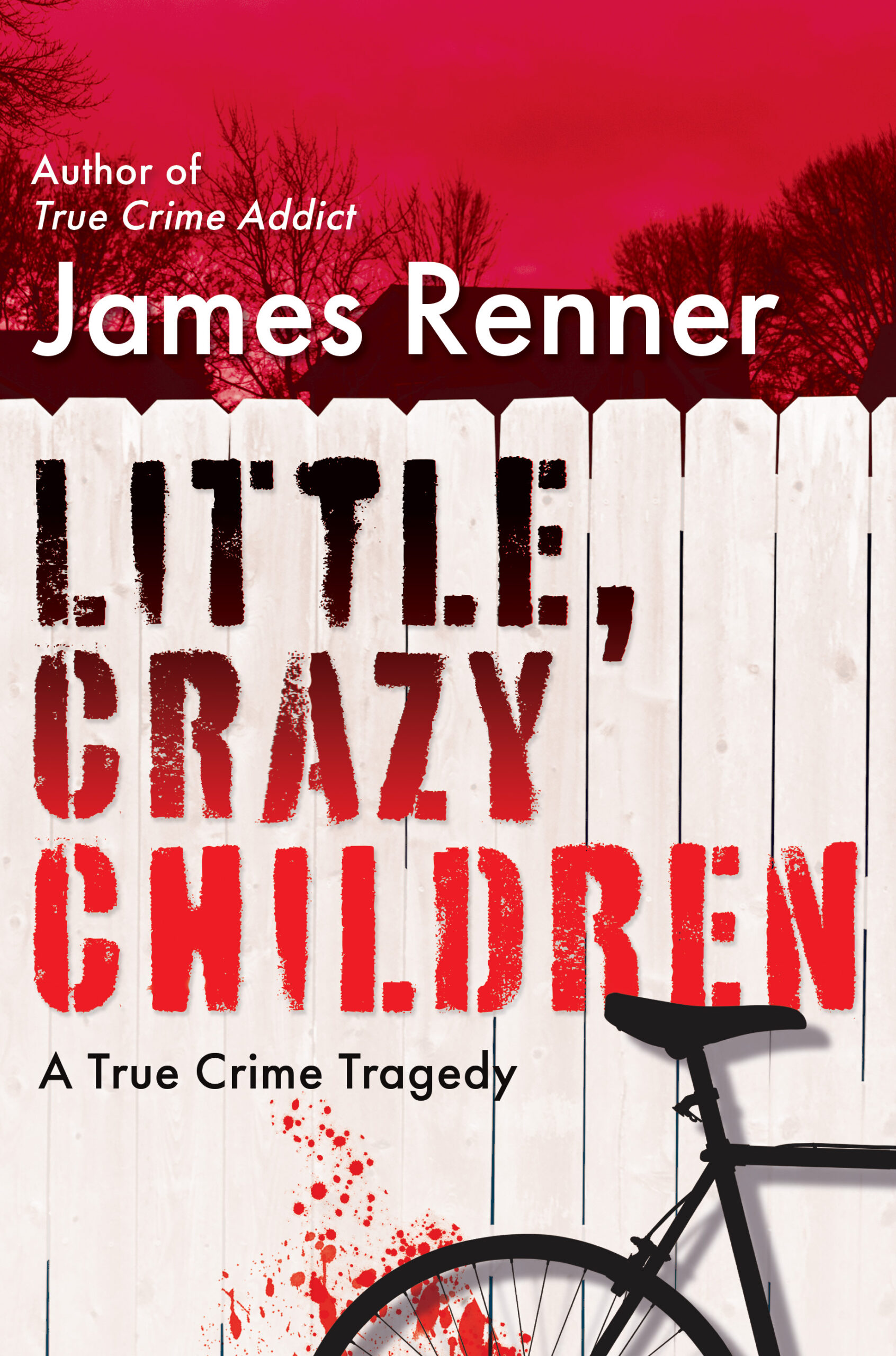
The Man from Primrose Lane is now available as a trade paperback!
Check out the sweet new cover from the folks over at Picador.
As always, I recommend picking it up at your local, neighborhood independent bookstore but it is also available via Amazon.
I can also report that Chad Feehan is busy writing the script for the Warner Bros./Bradley Cooper adaptation. So be a hipster and read the book before the movie comes out!
According to the New York Times, we’re entering a new Golden Age of short stories due to the explosion of eBook and eReaders and the public’s lazy attitude toward story length. Whatever the reason, I’ve noticed a lot of authors going back to work on their short game. And so this semester, in my Fiction Appreciation class at the University of Akron, we’re reading The Best American Short Stories, 2012. True to its name, there’s some goodies in here. Some stand-outs:
What We Talk About When We Talk About Anne Frank, reads so very true. A story that takes place almost entirely through small talk, we’re treated to a front-row seat at an awful reunion of suburban despots who decide to play a creepy game of “Who’s the hypocrite.” As in, would you really hide Anne Frank or would you turn her into the Nazi’s?
The Other Place, by Mary Gaitskill, is a mesmerizing account of a would-be serial killer’s first target and how she got away. But it’s also a story about how we fear our children will inherit our worst traits, wink wink, nudge nudge. Interesting this ran in the New Yorker. Would it have been published there if it had been written by a man?
Navigators reads like a prequel to Ernie Cline’s Ready Player One. It’s a touching story about a recently-divorced father and his son as they try to beat an 8-bit video game in which the objective is to lose everything you hold dear.
And fuckin Miracle Polish, man. Like a lost episode of The Twilight Zone. One of the good ones where the devil makes an appearance, offering a gift.
Beautiful Monsters has your post-apocalyptic dystopia fix, this one set in a world of ageless children who encounter an adult.
George Saunders’ Tenth of December is here. Everyone is raving for it. But it’s just an experiment in extreme POV that kind of gets in the way of the narrative.
Is this the best America has to offer, though? Nuh-uh. Not by a long shot. Next year, they should dig deeper. Hell, be proactive and add a couple self-published eBooks.
Lots of sites reported on the movie deal that happened last week, in which Warner Bros. purchased The Man from Primrose Lane for Bradley Cooper.
But inside-book-industry geek blog Galleycat got the scoop on what I’m writing next:
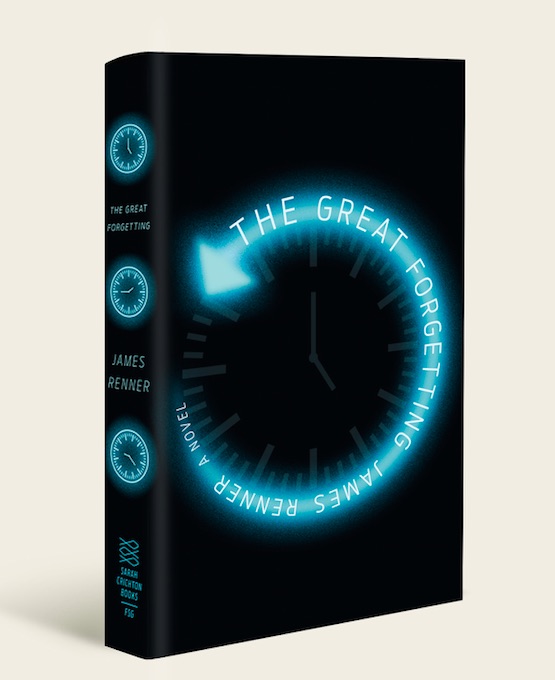
Renner told us that he plans on writing a sequel to the novel called Curse of the Man from Primrose Lane. First, he will finish The Great Forgetting and his true crime book Destination Unknown (about the 2004 disappearance of Maura Murray).
Okay. Back to writing…
I released a few new short stories over on Smashwords today, which are immediately available for downloading to all eReader devices. They are also filtering out to retail outlets such as Amazon and Barnes & Noble (I’ll have those links for you soon!)
Catch em all:
Keepsakes: A hoarder is forced to come to terms with the disappearance of her husband by finding something, anything to throw away.
Googleplex: A young couple discover their home may exist within a computer glitch.
Gordie and Skoot Kill a Bear: Two young veterans return to Iraq to reclaim their souls, which fled from their bodies during combat.
Drop me a line and let me know what you think!
I love going back to the classics. It’s fun to see what inspired modern-day novelists and screenwriters when they were kids. The End of Eternity, by Isaac Asimov, surely inspired cool stories like The Adjustment Bureau, Fringe, 12 Monkeys, Looper, and Primer.
Check it out: the story is told from the perspective of an “Observer” whose job it is to tweak history so that the aggregate majority of humans live in the highest achievable state of happiness. Just outside of Time is this place called Eternity, where numerous, emotionless monk-like middle management types toil away in an office complex, plotting reality changes to history. Observer Andrew Harlan actually becomes one of the trusted “Technicians” who must figure out the minimal changes necessary to put Time on the right course.
Of course Harlan then encounters a young woman whose existence causes him to question the ethics of what he is doing.
This has everything we’ve come to love about time travel stories: cool machines, mind-numbing paradoxes, and philosophical discussions about the power of “intention” — and it was written in 1955! Ultimately, though, it remains a very tight story about the education of Harlan. His gal breaks it down for him in the end: “In ironing out the disasters of Reality, Eternity rules out the triumphs as well. It is in meeting the great tests that mankind can most successfully rise to great heights.”
There is also quite a nice twist ending I don’t want to spoil, involving a Galactic Empire. Trust me, it fits. It’s short and sweet so check it out.
I write about crime. Murder. Serial killers.
I started as a journalist, investigating the 1989 unsolved abduction and murder of Amy Mihaljevic. Wrote a book about it. Spent years researching similar crimes across Ohio. I wrote a novel last year, The Man from Primrose Lane, about a reporter who tries to solve a murder only to discover the truth lies within the twisted history of his own family.
My favorite part of the job is when I’ve tracked down a suspect in a murder who still lives free and I get to go knock on his door. I get to tell him I know his secret and even though he’s managed to avoid jail, I get to put his name in print for everyone to see. I get to scare them.
I once flew to Key West on my own dime to confront a suspect in the Mihaljevic case.
Yesterday, I dropped by a house on North Union in Alliance, Ohio. It’s a two-story surrounded by a high fence, fortress-like. A handsome old man with wispy white hair lives there. He’s the most dangerous predator I’ve ever discovered. His name is Keith Simpkins. He came outside to talk with me.
“Do you remember me?” I asked.
He crinkled his eyes and smiled but shook his head. “I should. I know that. I do know you. But I can’t place it.”
“I’m James Renner,” I told him. “Last time you saw me I was a kid. I grew up and now I’m a writer. And I came by to let you know I’ll be writing about you on Monday.”
“You’re Jimmy,” he said, eyes wide.
I nodded. “I’m your grandson.”
My mom thought her father was dead for many years. Before she was old enough to have many memories of him, he disappeared. The story was he died in a car crash on 7-hill road coming back from the bars. Her mom took her and her three sisters to live with family on a farm in the country south of Ravenna. Around the time she met my father in 1975, she discovered her old man was still alive and had started a new family in Alliance. She had two brothers and a sister she’d never met.
My aunt, “A,” was twelve when she left the farm to go stay with Keith in Alliance. He gave A her own room and a new bike. She felt like a girl in a fairytale who finds out she’s an orphaned princess. Keith was damn near perfect. Active in the church. A leader in the local Boy Scout troop. A mentor at A.A.
Six months later, Keith was raping her every day. He’d ply her with booze and pot and then tie her to the bed and gag her mouth so she wouldn’t make a sound when it hurt. Sometimes it happened after school. But most times it was at night when everyone else was in bed. She could hear him coming down the hall because he whistled to himself on the way to her room.
On Saturdays, he would take A to Acme Hard Chrome (now Acme Industrial Group, on Freedom Street) where he chrome-plated metal, and rape her in his office.
Once, when A hosted a birthday party at the house, Keith went after one of her friends. The girl called her parents and left and avoided A the rest of the time she was at school.
“I turned him in to the school counselor at Stanton Middle,” she recalls. “I showed the bruises all up and down my thighs. They called him and brought him into the room with me and he denied it. Said I was just a hood kid trying to cause trouble.”
A’s oldest sister tried to protect the others. She’d made a pact with Keith that she wouldn’t resist when he raped her so long as he never went after her younger sisters. She didn’t find out until later that he lied to her too.
A couple years later, Keith started raping his daughter “V,” too. V says she remembers how it was before he disappeared when they were toddlers. Back then, he’d been content just making her watch.
As a kid, I never knew any of this. My mother suspected, probably, but had no first-hand knowledge (other than the time he got drunk and told her in a strange voice how much she looked like her mother when she was young) and so I spent a lot of time at his house on North Union with my little sister. Holidays, mostly. Sundays for football on occasion. His kitchen always smelled like boiled hotdogs, or sloppy joes and coffee. We were never left alone with him. I still walk the layout of his house in my dreams, the framed painting of the man praying in the living room, the Saturday Evening Post in the bathroom upstairs.
I remember he had a dog that could talk. It said “Momma,” and “I love you.” Sometimes he would invite the older kids to watch marathons of Rocky movies in the basement and I couldn’t wait for the day when he would invite me.
We were pen pals. He was a storyteller. He’d write me long stories, most of them funny, on tall sheets of yellow legal paper.
Then one day in 1989, my mother told me, simply, that my grandfather was a very evil man and that we would never see him again. The sisters, my aunts, had finally started sharing their stories with each other. And now their own children were old enough to catch Keith’s attention and there were far too many of us to keep an eye on. They had to cut ties before he started raping his grandkids. And that meant they couldn’t deny it anymore.
This revelation changed each of us in different ways. Most of us just had this weird empty spot in their family tree that was hard to explain to curious friends. Odd, but nothing tragic, right? My aunts, though, had to explain to their husbands why they were cutting off contact with their father. And that meant taking a good hard look at how fucked up their life was because of this one man. They were less able to assimilate this news because of the alcoholism, drug abuse, and physical deteriorations caused by years of the abuse Keith dealt to them. This revelation caused divorces. Mental breakdowns. A nuclear bomb had gone off, irradiating fucking everything. And the worst part was that Keith remained unharmed, clean, a respected member of society in the small town of Alliance. He even had the audacity to get sober.
But he never stopped his predation.
My uncle Michael lived with Keith back then. He was about 14 and I was 7 when I was still going over there regularly. Michael had a stop sign on his bedroom door which I thought was pretty badass (but, I realize literally as I’m writing this, how that sign was probably a not-so-subtle plea to his father). Michael taught me how to play Othello in his room one day. I thought he was the coolest.
Michael contacted me last week. I hadn’t seen him in 24 years. We met over pizza at Luigi’s in Akron. The dining room was full and it was hard to keep our discussion quiet. Several people looked over with shocked expressions during the course of that hour.
“His thing was to perform masturbation rituals on me, in my presence—orally stimulate my penis to force me to have an erection, that’s how he would get me to have anal sex with him,” says Michael. “His favorite location for these situations was in the basement of our house. There was a putrid blanket covered with dog fur that they kept in front of the door—that was our dog Rebel’s bed. He would shoo the dog away and want sex there a lot. He concentrated in that area, would venture into my bedroom occasionally when the coast seemed clear to him. There were times that I knew my mother was in the house upstairs when this was occurring—I believe she was completely aware on some level that this was occurring, but was either too indifferent to my situation, or did not feel compelled to intervene.
Sometimes, instead of raping him, Keith would ask him to undress. Then he would beat him senseless. That got his rocks off, too.
“I’ll never forget the rancid smell of his sweat, cheap hand cream, mingled with acrid smoke of menthol cigarettes he would smoke while masturbating. He has a very unusual body mark, or a scar on the tip of his penis that I remember vividly. It was very noticeable when he had an erection and since he frequently stuck it in my mouth, yea—I got a good look at it. The scar came out of the hole and down the head—just really weird.
“I remember being about age 14 when this was over, when I had considered castrating myself—I think I had the knife ready and was kind of looking for a way to commit suicide. That summer was rough for me, to say the least. I very nearly did it. But my story took a turn for the better—it was soon after that I met a girl and she showed me that I could be loved. She gave her heart to me and when I was with her, I didn’t feel like a freak, I felt good about myself. She was my first love—gets complicated. But, that is the basic narrative.”
Michael confronted his parents a few years ago after he had his second child. He told Keith he could still have contact with his grandsons but he would never be alone with them. Michael’s only condition: Keith had to admit the abuse. His parents cut off all ties with him, instead. Then, years ago, now, Keith sent him a card. He had stage-four colon cancer and probably wouldn’t live soon.
“Still trying to manipulate me,” says Michael. “Still trying to control the situation, find a way to get me back.”
“What side of the fence are you on?” my grandfather asked me on the porch of his house in Alliance.
I don’t tell him that my five-month-old daughter inherited his red hair and that I have to think about him every time someone asks about it.
“You need to go away,” I said. “But I was curious if you’d admit it first.”
“I’ve done some terrible things in my life,” he said. “But I’m in the church. I’m doing better. I’m a better man.”
“Okay.”
“This is a bad time for me.”
“Would there be a good time for this story?”
“You don’t understand, Jimmy. I just found out I have stage-four colon cancer. I probably don’t have much time left.”
“Would you do me a favor?” I asked. “Please write down everything you did so we have it when you’re dead.”
He nodded. “I’ve written some things already.”
Last year, my aunt V contacted a police detective and tried to press charges against Keith. But some rich men have put restrictions on prosecuting rape cases in the state of Ohio. You’ve got to file within 20 years. Here’s the thing, though—rapists screw up their victims so much it usually takes more than 20 years to get healthy enough to take them on. Even Michael’s assaults took place beyond the 20-year threshold. But he still maintains contact with some of his children. And their children. And no one believes he’s ever stopped.
We’re concerned there are also victims outside the family.
I’m concerned because my grandfather exhibits a very special and rare combination of behaviors that are shared by the killers I like to hunt. He’s a sexual sadist who enjoys not just the control he has over his victims but also the physical pain he administers through his rapes and beatings. He’s highly intelligent and organized. And he knows how to manipulate children.

We have no pictures of him. He didn’t like his picture taken. But he’s always had the same fine head of white/red hair and a bushy red mustache. He would be about 75 years old, today.
UPDATE: Here he is.
If you have information that can lead to the arrest of my grandfather, please contact Alliance Police at 330-823-5383.
Caught a screening of The Hobbit at Valley View in Cleveland last night. This is the only place in NE Ohio where you can see it in 3D at 48 frames per second, in XD sound, the way God and Peter Jackson intended. A single ticket sets you back $14. But is it worth it? What is 48fps really like? Here are my impressions the morning after.
Remember that scene in The Prestige where Hugh Jackman shows off his Tesla transporting machine for the first time and that old stage producer is sitting there and kind of jumps in fright when old Hugh disappears and then reappears behind him? The old man says, “Forgive me. It’s been so long since I’ve seen real magic.” And then he warns him to “dress it up” a bit so the audience can still pretend it’s just illusion. That’s pretty much what it was like.
All the critics and nerds whining about how the 48fps makes the film look fake have it wrong. It makes it look too real. More than you’re ready for. For me, it felt like I was at Hale Farm and Village, that Civil-war era community they took us to in gradeschool. It felt like I was immersed in a artificial setting watching people act out a scene around me. It’s so real you become aware of the characters in a way we are not used to. And that’s the best way I can explain how it feels. It feels more like a stage production than any film you’ve ever seen. But that’s not bad, in my opinion. It’s just a different experience. It might be film but it’s not a MOVIE and it shouldn’t be called one. This is something new. So new, there is no name for it.
You know what would really be fucking cool in 48fps? A courtroom drama. Something like 12 Angry Men. Something where you’ve got real people in a real, tight situation. That’s how they should have introduced 48fps because it’s so goddamn real it messes with your mind when you see things like fighting rock giants and trolls and orcs. The immersiveness of the experience is telling you, holy shit, that’s a real goddamn goblin. But your mind is too smart for that. It insists it can’t be real. And then you’re spending all this time fighting with yourself. It kind of pulls you away from it.
For all its faults, you owe yourself to go see this movie in 48fps/3D. It will remind you of how you believed in real magic when you were a kid.